
5 Surprising Truths About Inventory Software That Go Beyond Spreadsheets
There comes a moment in nearly every growing business's journey when spreadsheets hit what professionals call "the ceiling." Your warehouse team is double-entering data. Your purchasing department can't get accurate counts. Your e-commerce platform shows stock that doesn't exist. Suddenly, the trusted Excel files that got you through the early days are holding you back.
If you're at this inflection point—considering inventory management software (IMS) or a warehouse management system (WMS)—you're not alone. The global warehouse management systems market is projected to reach $8.15 billion by 2028, driven by businesses exactly like yours realizing that manual processes don't scale.
But here's what most "ultimate guides" won't tell you: choosing inventory software isn't about finding the "best" system. It's about finding the right system for your specific operations, workflows, and growth trajectory. After helping hundreds of businesses navigate this decision, we've identified five counterintuitive truths that separate successful implementations from the 70% that miss their objectives.
Truth #1: The "Perfect" Inventory System Doesn't Exist
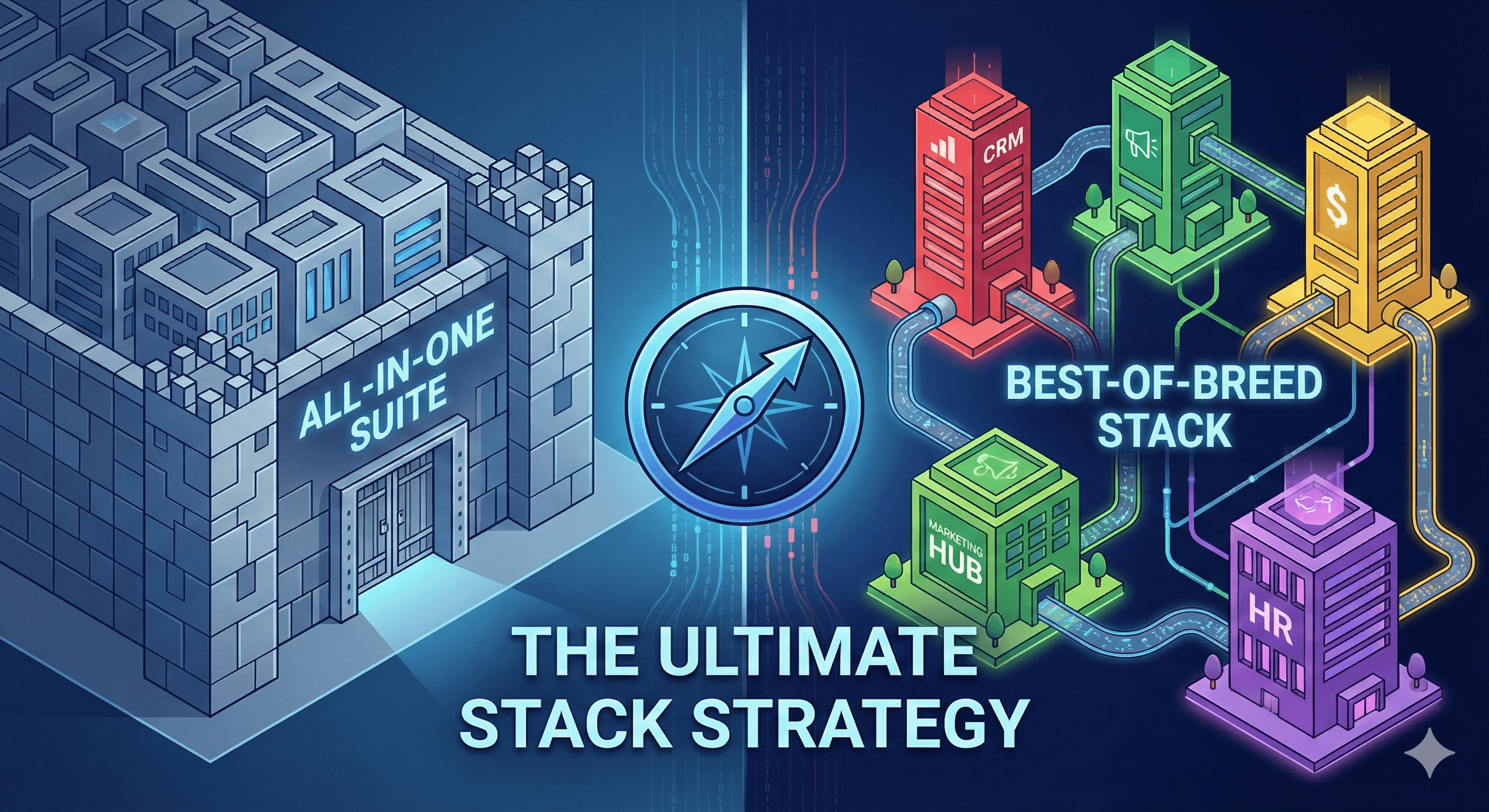
The software industry loves to promise all-in-one solutions. Every vendor claims their platform handles everything: receiving, put-away, picking, packing, shipping, cycle counting, returns, and reporting—all seamlessly integrated with your existing stack.
The reality is more nuanced. Every warehouse operates differently. A 3PL handling high-velocity e-commerce fulfillment has radically different needs than a manufacturer managing raw materials, work-in-progress, and finished goods. A retailer with 50 locations needs different functionality than a single-warehouse distributor.
This is precisely why structured requirements gathering matters more than vendor demos. Before evaluating any software, you need answers to questions like:
- What are your actual picking methods? (Batch, wave, zone, discrete?)
- How do you handle returns and damaged goods?
- What integrations are non-negotiable? (ERP, e-commerce, shipping carriers?)
- What's your cycle count strategy?
- How do you manage multiple locations or warehouses?
The companies that succeed at IMS selection don't look for "the best" system—they document their specific workflows first, then find software that matches. This is where a structured RFQ process becomes invaluable: it forces the discipline of defining requirements before falling in love with features you don't need.
Truth #2: You Don't Need RFID or Full Automation (Yet)
Walk into any logistics trade show and you'll be overwhelmed by promises of autonomous mobile robots, RFID-enabled real-time tracking, and AI-powered demand forecasting. The implied message is clear: if you're not fully automated, you're falling behind.
Here's what the data actually shows: For most growing businesses, barcode scanning with smart process design outperforms expensive automation investments.
Consider the numbers:
- 98.5% accuracy is achievable with basic barcode verification—good enough for most operations
- Barcode scanners cost 80-95% less than RFID infrastructure for comparable accuracy improvements
- "Smart augmentation" (combining human workers with simple technology) delivers 82% lower costs than full automation while maintaining flexibility
The right approach for most businesses? Start with:
- Barcode everything: Products, locations, bins, and receiving documents
- Implement scan-to-verify: Require scanning at receiving, put-away, and picking
- Add cycle counting: Continuous small counts beat annual wall-to-wall inventories
- Measure first, automate second: Identify your actual bottlenecks before investing in solutions
Advanced automation makes sense when you're processing 10,000+ lines per day, dealing with extreme labor shortages, or handling products where errors have catastrophic consequences (pharmaceuticals, aerospace parts). For everyone else, disciplined processes with basic technology win.
The lesson for software selection: Don't pay for warehouse automation capabilities you won't use for five years. Look for systems that excel at your current scale with clear upgrade paths.
Truth #3: Your Biggest Challenge Isn't Inventory—It's Data Silos
Here's the scenario we see constantly: A company implements a best-in-class WMS, but their inventory problems don't improve. Why? Because their WMS doesn't talk to their:
- Order Management System (OMS) managing sales channels
- Transportation Management System (TMS) handling shipping
- Enterprise Resource Planning (ERP) system tracking finances
- E-commerce platforms expecting real-time availability
- Point-of-sale systems at retail locations
The result is "data silo syndrome": different systems show different counts, orders slip through cracks, and your team spends hours reconciling discrepancies instead of improving operations.
When evaluating inventory software, integration capabilities matter more than feature lists. Ask vendors:
- Native integrations: What systems do you connect to out-of-the-box? (Shopify, NetSuite, QuickBooks, SAP, major carriers?)
- API quality: Is the API well-documented? REST or SOAP? Real-time or batch?
- EDI capabilities: If you work with major retailers, do you support their EDI requirements?
- Middleware support: Do you work with iPaaS platforms like Boomi, MuleSoft, or Celigo?
One unified source of truth beats five specialized systems that don't communicate. Sometimes the "less powerful" system with better integrations delivers more value than the feature-rich platform that creates new silos.
Truth #4: The Hidden ROI Nobody Calculates
When building the business case for inventory software, most companies focus on obvious metrics: reduced carrying costs, lower stockouts, faster picking. These matter—but they're often not the biggest wins.
The hidden ROI drivers that successful implementations capture:
Labor Efficiency Gains
- 30-50% reduction in picking time through optimized slotting and path optimization
- Elimination of paper-based processes that create transcription errors
- Reduced training time for new warehouse workers (from weeks to days)
Error Reduction Compound Effects
- 99.9% picking accuracy reduces customer service costs, return shipping, and replacement inventory
- Accurate counts eliminate safety stock buffers, freeing working capital
- Real-time visibility prevents expedited shipping when orders can be properly planned
Workforce Improvements
- 30-50% lower turnover when workers have tools that make their jobs manageable
- 70-80% fewer workplace accidents with proper slotting and ergonomic path design
- Higher employee satisfaction translates to better customer service
Strategic Capabilities
- Faster new product introductions when systems handle receiving and slotting automatically
- New channel enablement (dropshipping, marketplace fulfillment) becomes possible
- M&A integration becomes feasible when systems are standardized
When building your ROI case, don't just count the obvious savings. The compound effects of getting inventory right touch every corner of your business.
Truth #5: Software Is Only as Good as Your Data Discipline
We've seen companies spend six figures on best-in-class WMS platforms, only to have implementations fail within 18 months. The pattern is always the same: they treated software as a solution instead of a tool.
Software amplifies your processes—it doesn't fix them. If your receiving process doesn't verify quantities, software won't magically create accurate counts. If your team doesn't follow put-away procedures, software won't maintain location accuracy. If nobody does cycle counts, your perpetual inventory will drift from reality.
Before implementing any inventory system, honestly assess:
- Do you have documented SOPs for receiving, put-away, picking, and shipping?
- Is someone accountable for inventory accuracy metrics?
- Do you have a cycle count program and actually execute it?
- Are your product masters clean—accurate dimensions, weights, and descriptions?
- Do you enforce the processes or let exceptions become the rule?
The companies that succeed at inventory software treat implementation as the beginning, not the end. They:
- Establish baseline metrics before going live
- Measure weekly in the first 90 days
- Conduct root cause analysis when accuracy dips
- Continuously improve processes based on data
- Hold teams accountable to targets
Software gives you visibility into problems. Only process discipline fixes them.
Making the Right Choice for Your Business
Choosing inventory management software is one of the most impactful technology decisions a growing business makes. Get it right, and you unlock scalability, accuracy, and efficiency that compounds for years. Get it wrong, and you join the 70% of implementations that fail to meet objectives.
The five truths we've shared point to a consistent theme: successful software selection starts with understanding your specific needs, not vendor feature lists.
That's exactly why we built StackMatch. Our AI-powered RFQ creation helps you:
- Document your requirements through intelligent questions tailored to warehouse and inventory operations
- Compare vendors objectively using structured evaluation frameworks
- Avoid feature bloat by matching capabilities to your actual workflows
- Get competing proposals from vendors who understand your specific needs
Whether you're evaluating WMS, IMS, or broader ERP systems with inventory modules, the right process matters more than the right vendor.
Ready to find inventory software that actually fits your operations?
Browse Inventory & Warehouse Management Vendors →
Create Your IMS/WMS Requirements in Minutes →
The inventory management software market is complex, but your selection process doesn't have to be. StackMatch helps growing businesses make confident software decisions—without the 134-day buying cycles or 70% failure rates that plague traditional procurement.