Fixed Asset Management: The Boring Software That Saves You Audit Nightmares
The "In the Trenches" Hook
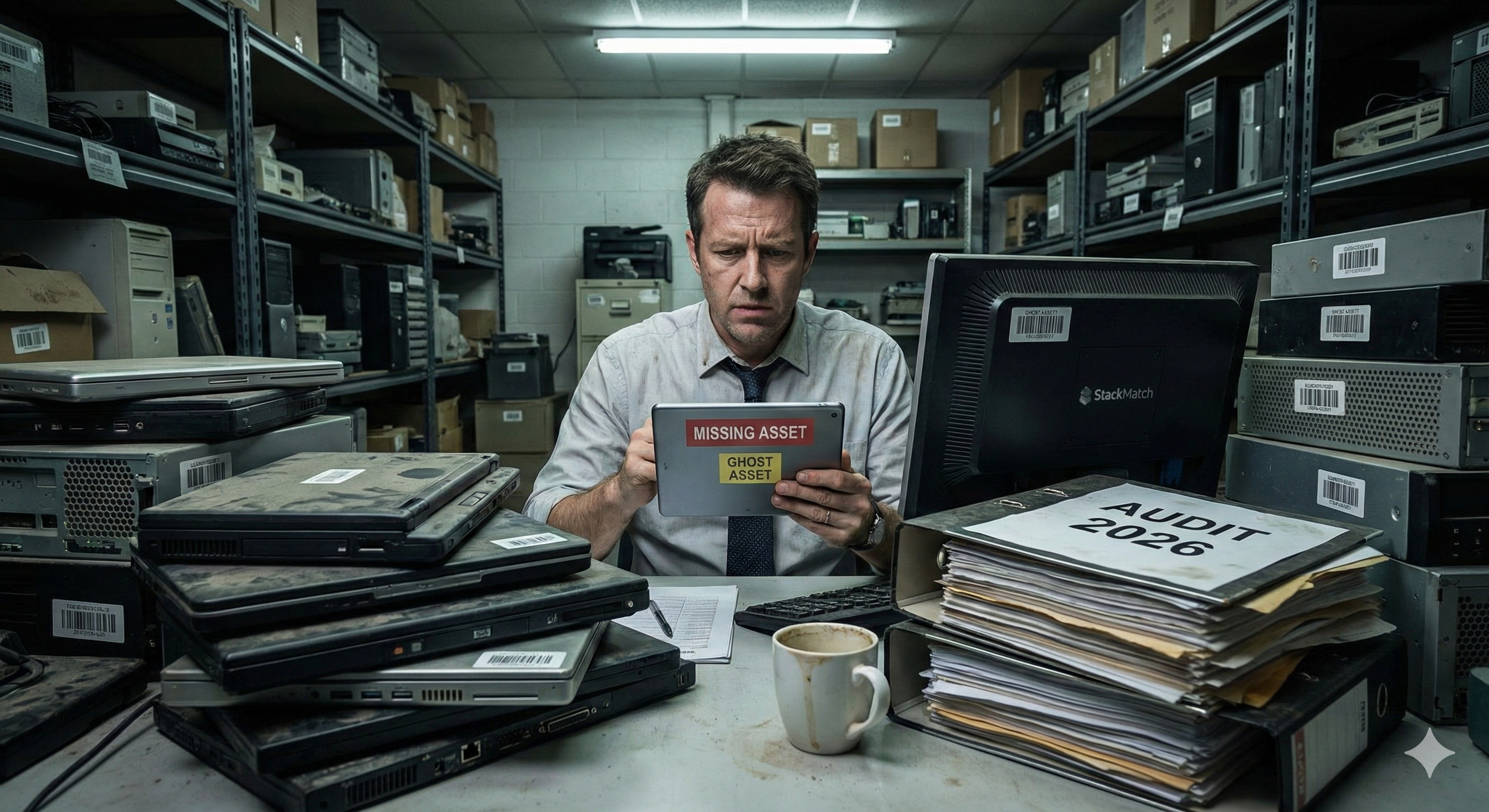
There is a specific kind of panic reserved for the moment an auditor asks to see the physical location of "Server Rack B-12," and you know—deep in your bones—that Rack B-12 was recycled during the office move in 2019.
Yet, there it sits on your ledger. And you are still paying property taxes on it.
Most finance teams treat fixed assets as an afterthought. It's a line item to look at once a year. But when you are managing millions in hardware, machinery, or office equipment, "set it and forget it" isn't a strategy; it's a liability. Spreadsheets work when you have 50 laptops. When you have three warehouses and a fleet of vehicles, a spreadsheet is just a list of mistakes waiting to be found by the IRS.
The "Vendor vs. Reality" Gap
If you look at the marketing material for most Asset Management tools, they promise a utopia of "total visibility" and "one-click compliance." They sell you the dream that buying the software automatically organizes your physical reality.
Here is the reality: Software cannot fix a broken process. If your receiving dock doesn't tag new equipment the moment it arrives, the best software in the world is useless. Vendors rarely mention that the "seamless integration" with your ERP often requires a six-week custom implementation project.
Consultant Note: The software is only 50% of the solution. The other 50% is forcing your IT and Operations teams to actually scan the barcodes. If you don't have organizational buy-in, don't buy the software.
What Actually Is Fixed Asset Management Software?
At its simplest, this software tracks an asset from acquisition to disposal. It records where the item is, who has it, and—crucially for finance—what it is worth right now.
Unlike a standard inventory system (which tracks consumable goods you sell), Fixed Asset Management tracks the long-term tools you use to run the business. It automates the complex math of depreciation so your balance sheet reflects reality, not guesswork.
The 4 Critical Features (That Actually Matter)
Ignore the flashy dashboards with 3D charts. You need tools that satisfy auditors and tax codes.
1. Multi-Book Depreciation Engine
This is non-negotiable. You need to calculate depreciation differently for tax purposes (MACRS in the US) than you do for GAAP/financial reporting.
The Dealbreaker: If the software forces you to use spreadsheets to handle tax depreciation adjustments, walk away. It defeats the entire purpose.
2. Mobile Barcode/QR Scanning
Data entry kills accuracy. You need a mobile app that allows a warehouse manager or IT specialist to scan an asset tag with their phone and update its location instantly.
The Reality: If it requires a $1,500 proprietary handheld scanner, your team won't use it. It must work on iOS and Android.
3. "Ghost Asset" Detection Tools
Good software should flag assets that haven't been scanned or audited in X months.
Why it matters: Ghost assets (items on the books that don't physically exist) inflate your insurance premiums and tax bills.
4. Audit Trail & Change History
Who changed the useful life of that forklift from 7 years to 10 years? When was that laptop marked as "disposed"?
The Standard: You need a read-only log that shows User, Time, and Action. Auditors love this; fraud investigators require it.
The "Gotchas" (Red Flags)
Be skeptical during the demo phase. Here is where they hide the bodies:
The "ERP Module" Trap: Your ERP vendor (NetSuite, SAP, Microsoft) will try to sell you their fixed asset module. Warning: These are often clunky, rigid afterthoughts. They integrate well, but they often lack robust depreciation flexibility.
Legacy Connectors: Just because a vendor says they integrate with your General Ledger doesn't mean it's plug-and-play. Ask for a reference client using your exact version of your GL.
Per-User Pricing: Asset management is a team sport. If the vendor charges $100/month for every maintenance guy who just needs to scan a barcode once a week, the ROI collapses. Look for "unlimited read-only/scanner users."
Consultant Note: Most companies are paying taxes on laptops they threw away three years ago. A dedicated fixed asset tool pays for itself in tax savings alone—often in the first 12 months—just by cleaning up your "ghost assets."
Who Should Buy What (The Segmentation)
The Small Biz (Under $5M Revenue / Under 200 Assets)
Do not overbuy. You don't need Oracle.
What you need: A cloud-based, simple tracker that handles straight-line depreciation and prints barcode labels.
The Strategy: Get off Excel, but keep costs under $200/month.
The Mid-Market (Growing / Multi-Location)
You have multiple offices, a fleet of vehicles, or significant IT hardware.
What you need: Robust tax depreciation (MACRS, ACRS), integration with your GL (Xero, QuickBooks Enterprise, Sage), and a strong mobile app for physical audits.
The Strategy: Focus on compliance. You are now big enough to be audited.
The Enterprise (Heavy Machinery / Global)
You are tracking millions in CapEx.
What you need: Construction-in-progress (CIP) tracking, multi-currency support, and deep integration with SAP/Oracle.
The Strategy: You need a "best-of-breed" solution that talks to your ERP, or a highly customized ERP module.
Skip the 40-Hour Demo Marathon
Finding software that handles complex tax depreciation and is easy enough for your maintenance team to actually use is a balancing act. You don't want to find out the mobile app is glitchy after you've already tagged 5,000 items.
The traditional approach? Spend 40+ hours demoing vendors, reading obscure tax compliance documentation, and playing phone tag with sales reps who can't answer your technical questions.
There's a faster way. StackMatch is the first RFP marketplace for B2B software. Our AI-powered RFQ creation takes you through a guided questionnaire—covering everything from your depreciation requirements to integration needs—and generates a professional RFP in 15 minutes instead of weeks.
Then, instead of cold-calling vendors yourself, vendors come to you. Post your RFP to our marketplace and receive competing proposals from qualified fixed asset management providers. Compare pricing, features, and implementation timelines side-by-side—with full transparency.
Ready to stop paying taxes on ghost assets?
Create your AI-powered RFP in 15 minutes | Browse asset management vendors
Last updated: January 30, 2026